
Two reflective planes turn one bathroom decor decision into a multi-trade assembly. The practical question is whether the second mirror adds enough function to justify concealed fixings, duplicated glare, difficult cleaning, trapped services, and a more complicated replacement.
When does a mirror-on-mirror bathroom wall work?
A mirror-on-mirror bathroom works when the foreground mirror has a clear purpose and the glass, lighting, wiring, support, edges, cleaning access, and eventual removal are designed as one system.
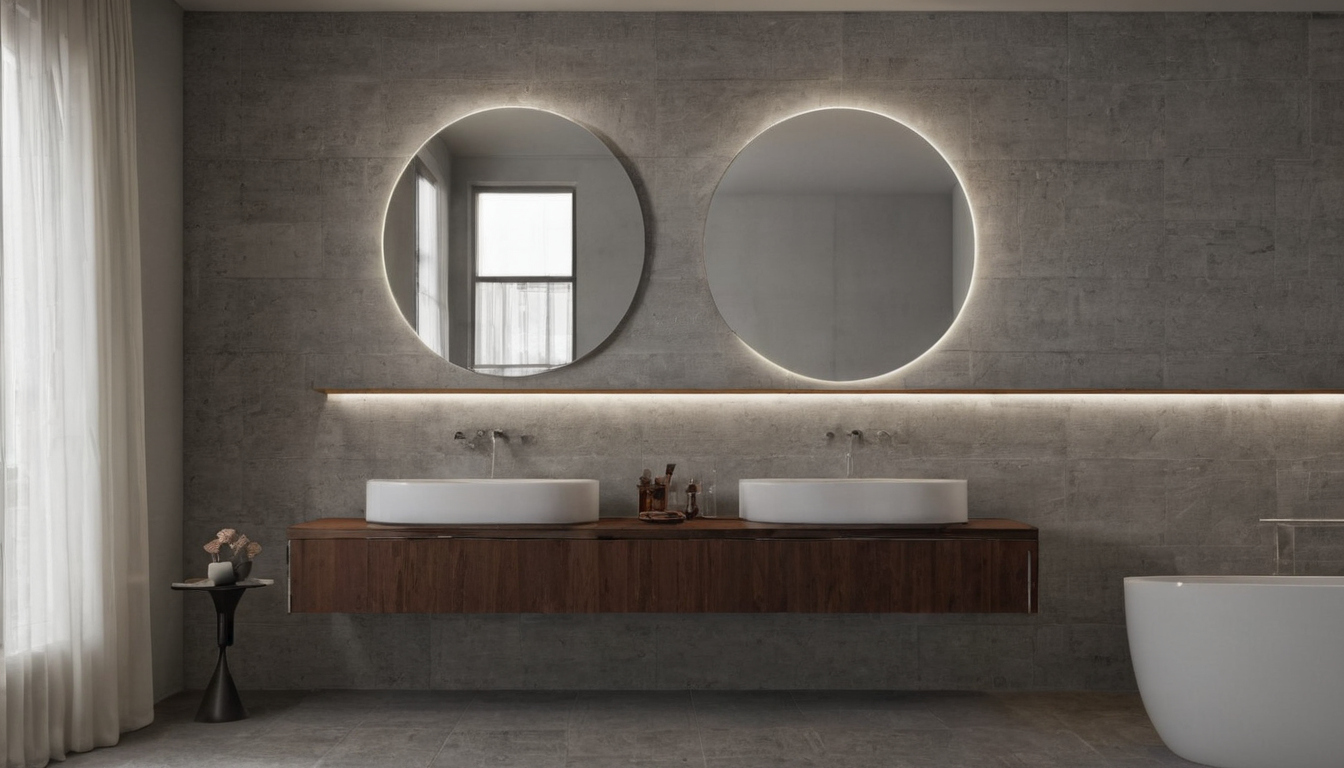
When does a mirror-on-mirror bathroom wall work shown with floor, wall, and fixture relationships visible.
Suitable: A primary bathroom, powder room, or hotel-style vanity planned before construction. The foreground mirror provides integrated lighting, magnification, demisting, storage, or a deliberate frame, while the background mirror has an appropriate backing and documented support.
Conditionally suitable: A retrofit after a glazier verifies the existing glass, backing, wall attachment, concealed services, and fixing route. An adhesively mounted background mirror requires particular caution because its bond and substrate may be difficult to inspect.
Unsuitable: A compact bathroom where repeated reflections amplify clutter, or any wall with cracked glass, loose areas, uncertain adhesion, unsupported edges, moisture damage, inaccessible wiring, or no safe removal route.
The layered mirror should add function, not merely another reflection
A foreground mirror earns its place by improving daily use. An illuminated mirror can concentrate facial light, a magnifying insert can support grooming, a shallow mirrored cabinet can add storage, and a demister can keep the working area clear. A frame can also establish a distinct vanity zone against an otherwise continuous mirrored wall.
The design must still account for vanity width, basin centers, user heights, faucets, outlets, sconces, doors, and shower glass. A frame that clips a wall fitting or floats awkwardly between two basins creates another edge without creating order. In a small bathroom, one well-positioned mirror often performs better.
A mirror-on-mirror bathroom fails when the assembly was not designed as one system
Failures often begin before the foreground mirror arrives. Incompatible adhesive can damage mirror backing. Unsupported weight can load the background glass instead of the wall. Site drilling can crack installed glass, while inaccurate cutouts can obstruct electrical boxes. Drivers and demister controls also fail the serviceability test if replacement requires breaking the wall mirror.
Minor scratches or slight edge variation may be cosmetic. Cracks, loose glass, deteriorated backing, corroded fixings, trapped electrical connections, and unverified load transfer require redesign rather than concealment. Once the assembly passes this triage, its proportions must control what the two reflective planes repeat.
How should the two bathroom mirrors be proportioned to control reflections?
The foreground mirror should read as a deliberate object while the background remains visually continuous. Set its dimensions from the vanity, basins, user eye levels, faucet height, lighting, and ceiling line, then test the composition from actual standing and seated positions.
| Vanity condition | Foreground-mirror strategy | Reflection risk | Verdict |
|---|---|---|---|
| Single basin | Center on the basin or vanity according to the wider room geometry | An off-center faucet or sconce becomes conspicuous | Suitable with a full-scale mock-up |
| Double basin | Use one broad mirror or two consistently centered mirrors | Repeated inner edges can create clutter | Suitable when gaps and lighting axes align |
| Accessible vanity | Set the reflecting area for the actual seated user and applicable requirements | A frame may reduce the useful low reflection | Approve from the seated sightline |
| Shared family vanity | Favor a taller useful area over a narrow decorative composition | Different heights reveal ceiling lights and clutter | Conditional on multi-height testing |
Repeated edges and reflected joints must be aligned intentionally
A small error appears twice because the background mirror reflects the foreground perimeter. Align finished edges with vanity ends, basin centers, grout lines, stone joints, and lighting axes. The fabricator and installer should agree on dimensional tolerance, edge finish, level, plumb, symmetry, and parallel gaps. Bevels widen the apparent boundary, while dark frames increase contrast.
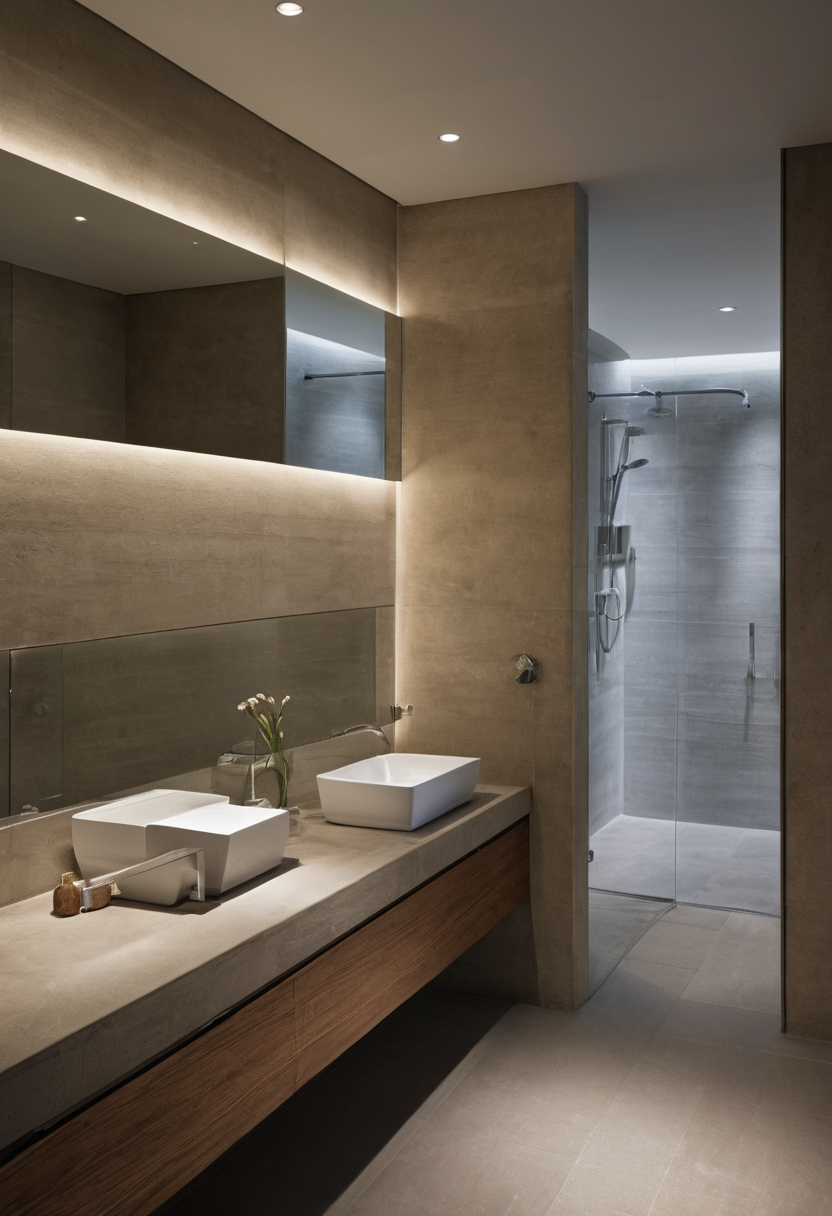
How should the two bathroom mirrors be proportioned to control reflections shown with floor, wall, and fixture relationships visible.
The mirror-on-mirror composition must be tested from actual sightlines
Mark the proposed mirror at full scale with tape or a temporary panel. Check it from the entrance, each basin, the shower, toilet, and adjacent room. Note reflected doors, windows, towel rails, luminaires, and countertop clutter in daylight and after dark.
Where glazing is near a bath, shower, door, or another impact-prone location, verify local requirements rather than assuming every vanity mirror falls within 16 CFR Part 1201. That federal standard applies to specified architectural glazing products, including certain doors and shower enclosures, rather than automatically covering every wall-mounted mirror.
Long-life lighting does not remove the need for service access. ENERGY STAR states that qualified LED lighting uses at least 75 percent less energy and lasts up to 25 times longer than incandescent lighting, but drivers, controls, and connections may still need attention. The next test is whether those light sources remain comfortable after both mirrors duplicate them.
How can a mirror-on-mirror bathroom provide task lighting without glare?
A layered vanity needs controlled light from the front or sides of the face. The full mirrored wall can multiply bright sources, so output, diffusion, dimming, color quality, electrical protection, and service access must be resolved before glass fabrication.
Side lighting usually controls facial shadows better than overhead lighting alone
Side sconces generally spread light across both sides of the face more evenly than a downlight alone, provided they clear the foreground mirror, doors, and cabinets. Their positions should follow user eye levels and the actual vanity width rather than a generic elevation.
An integrated luminous border can suit a narrow wall, but its diffuser should conceal individual LED points and remain comfortable at close range. An overhead downlight can support general illumination, although it may create brow and chin shadows. Backlighting adds depth and orientation light but should not serve as the principal grooming source.
Reflected luminaires must be evaluated from every bathroom approach
Test temporary lighting with the mirror outline marked at full scale. View it from the basin, doorway, shower approach, and any seated position during daytime and after dark. One exposed lamp can appear several times, turning a modest brightness problem into a row of glare.
The specification should favor strong color rendering, consistent color temperature, smooth low-level dimming, low visible flicker, and diffusers that prevent direct views of intense sources. Commission the final output for facial illumination rather than room brightness alone.
Bathroom electrical services must remain safe and serviceable behind the mirrors
Illuminated mirrors, demister pads, outlets, sensors, and low-voltage lighting require an electrician to coordinate bathroom zones, wet-location ratings, grounding, isolation, cable routes, and inspection requirements for the project jurisdiction. Junctions, drivers, and transformers must remain accessible without breaking the background mirror.
Paints, cleaning products, building materials, and furnishings are among the indoor sources of volatile organic compounds identified by the U.S. Environmental Protection Agency. If an installation product emits volatile organic compounds, the agency recommends increasing ventilation during use. With lighting and wiring resolved, the fixing system becomes the decisive risk.
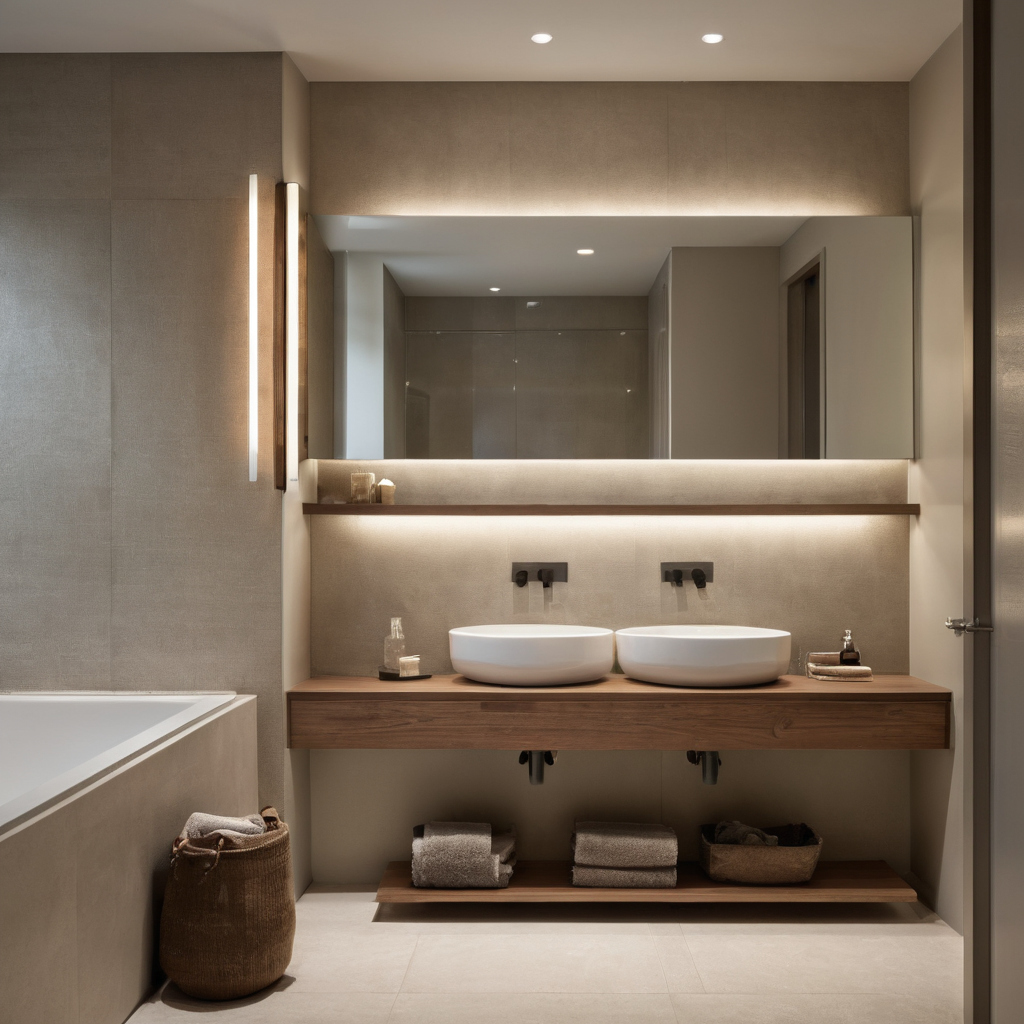
How can a mirror-on-mirror bathroom provide task lighting without glare shown as a planning reference for layout, scale, and material decisions.
How can a vanity mirror be attached safely over an existing mirrored wall?
A vanity mirror should be mounted over an existing mirror only after a glass specialist verifies the background glass, substrate, and original fixing method. The foreground assembly should not depend on an unknown glass face for support.
The background bathroom mirror must be surveyed before it carries any added assembly
The survey should record mirror thickness, glass type, backing, edge condition, substrate, adhesive pattern, clips, and channels. It should also document the foreground mirror’s dimensions, weight, frame, lighting components, and center of gravity. A heavy illuminated frame behaves differently from a thin frameless panel.
A glazier should reject over-mounting if the survey finds:
- cracks, chipped edges, bowing, loose areas, or spreading desilvering;
- unknown adhesion or an unstable wall substrate;
- no verified route for transferring load beyond the glass face;
- plumbing or wiring where anchors must pass; or
- moisture damage that cannot be exposed and repaired.
Framing, blocking, masonry, plumbing, and electrical routes should be located through drawings, accessible inspection, or specialist scanning suitable for work near glass. Drilling an installed mirror is not routine site work. Required holes may need specialist fabrication before installation, or the background mirror may need replacement.
Adhesive compatibility does not replace structural verification
Mirror mastic or a suitable neutral-cure product should be used only with written approval from the mirror and adhesive manufacturers. Confirmation should address glass-to-glass use, backing compatibility, moisture exposure, surface preparation, bead pattern, curing, temporary support, vertical load, and long-term movement.
Chemical approval establishes whether the product may damage a coating. Structural verification establishes where the weight goes. Generic construction adhesive answers neither question and may create visible telegraphing, trap moisture, or make replacement destructive.
Damp cavities require prompt attention. The U.S. Environmental Protection Agency advises drying wet or damp materials within 24 to 48 hours to help prevent mold growth. This general moisture guidance does not replace a mirror manufacturer’s warranty conditions.
A demountable vanity mirror is preferable when services or replacement are likely
A tested rail, concealed bracket, framed cleat, clip system, or engineered stand-off can transfer load into framing, blocking, or masonry rather than the background glass. Hardware should have documented load ratings, corrosion resistance, substrate requirements, anti-lift restraint, and adequate installation clearance.
A demountable design should let an electrician reach drivers, controls, demisters, and junctions, then remove the foreground mirror without breaking the mirrored wall. The remaining question is whether the perimeter can resist moisture while staying cleanable.
Which edge, gap, and moisture details keep layered bathroom mirrors maintainable?
Layered mirrors remain maintainable when the perimeter, cavity, and lower edge resist trapped moisture while allowing realistic cleaning access. A narrow shadow line may look precise but can collect spray and dust.
The lower edge of a mirror-on-mirror assembly carries the highest cleaning burden
Toothpaste, soap, and mineral deposits collect where the foreground mirror approaches the countertop. Closely beveled edges offer little access, frames create ledges, and stand-offs help only when a cloth or narrow tool can reach the cavity. Vessel basins, high faucets, shower proximity, and weak ventilation increase the burden.
Mirror edge protection must suit the bathroom’s humidity and chemical exposure
Polished edges, backing, and edge sealing should follow manufacturer instructions. Frames, clips, rails, spacers, and fasteners should resist corrosion. Avoid prolonged edge wetting and any partially sealed pocket that traps water.
Cleaning products must also suit adjacent finishes. The Natural Stone Institute recommends neutral cleaners, stone soap, or mild liquid detergent with warm water for natural stone. It warns that abrasive powders and creams can scratch the surface. These access details must be fixed in the project sequence rather than improvised after installation.
What project sequence prevents mirror, lighting, and vanity conflicts?
The assembly must be coordinated before wall closing. One approved vanity elevation should control reinforcement, cable exits, lighting positions, faucet clearances, stone joints, glass fabrication, installation access, and removal.
One coordinated vanity elevation should control all bathroom trades
- Concept: Approve sightlines, proportions, lighting, cleaning access, and the replacement strategy.
- Coordination: Confirm wall build-ups and review interfaces with the glazier, electrician, cabinetmaker, stone installer, and builder.
- Before wall closing: Install blocking, boxes, cable routes, and accessible driver locations.
- Before fabrication: Approve hardware, glass specifications, electrical connections, finishes, lead times, and replacement components.
- Installation: Verify finished levels, mount both assemblies, and commission lighting and controls.
- Handover: Record product data, wiring, fixing locations, cleaning instructions, warranties, and removal procedures.
Final mirror dimensions should follow verified site conditions
The glazier should measure after finished surfaces are installed or their exact build-ups are confirmed. Bowed or out-of-square walls may require correction, templates, scribed components, or wider intentional gaps. This is why project teams should coordinate the bathroom design before the renovation scope is fixed. Only then can the premium be judged fairly.
Is a mirror-on-mirror bathroom worth the added cost and maintenance?
A mirror-on-mirror bathroom is worth the premium when the foreground layer improves grooming light, storage, magnification, scale, or architectural focus and when removal has been planned. It is poor value when the second layer merely disguises weak proportions or creates inaccessible surfaces.
The quotation should separate surveys, glass, backing, edge finishing, frames, lighting, electrical work, blocking, specialist fixings, templates, installation, cleaning, removal, and replacement. A retrofit may also require exploratory work, altered wiring, or removal of a mirror with unknown adhesive and substrate conditions.
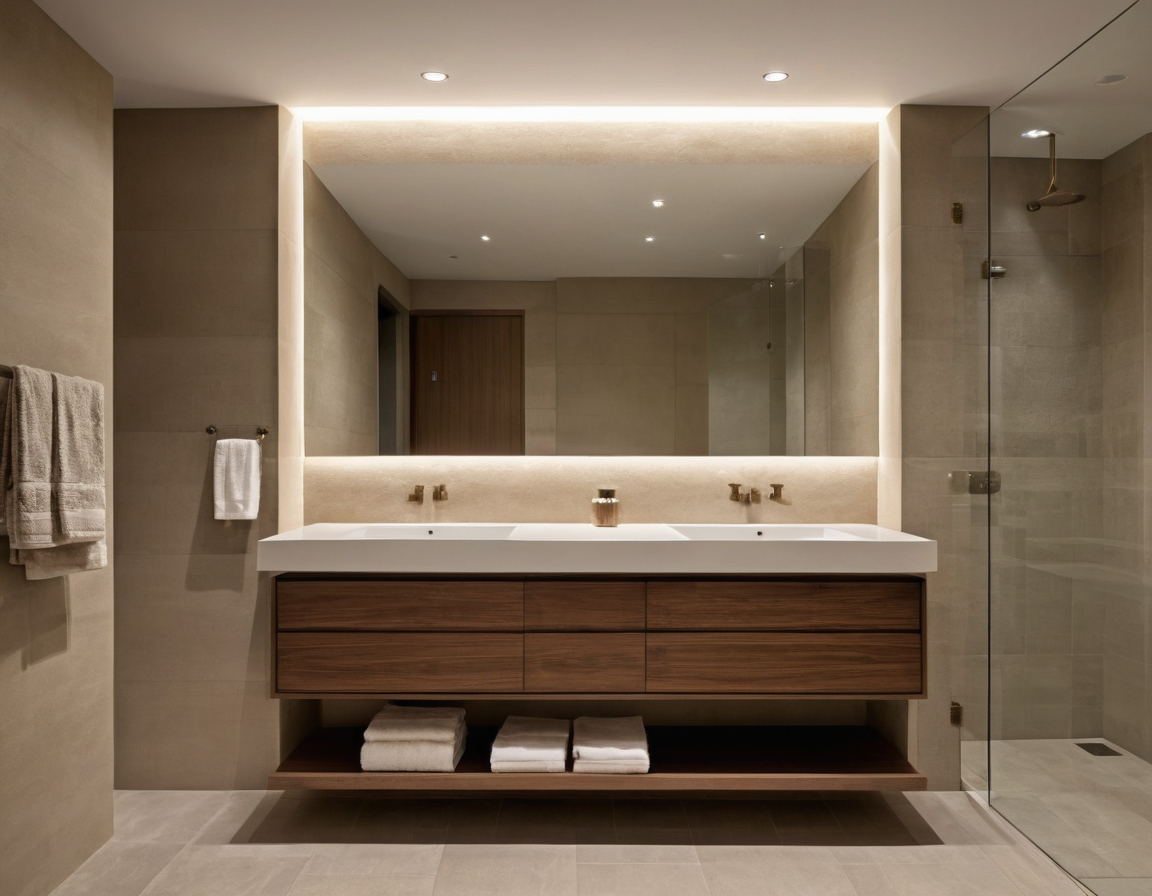
Is a mirror-on-mirror bathroom worth the added cost and maintenance shown with finish, fixture, and clearance relationships visible.
The replacement plan should be priced with the original installation
The foreground mirror should have a written removal procedure before fabrication. A permanently bonded panel may cost less initially, but replacement can crack the background glass, damage its reflective coating, or require renewal of both layers. A demountable support may cost more to coordinate while preserving access and reducing collateral damage.
The project file should record glass dimensions, thickness, edge finish, backing, frame specification, mounting pattern, hardware finish, driver location, lighting specification, and electrical connections. Availability of replacement drivers, LEDs, controls, and proprietary hardware should be checked rather than assumed.
A simpler bathroom mirror detail is better when coordination cannot be guaranteed
A single full-wall mirror offers visual expansion with fewer edges. A framed mirror on tile is easier to size, clean, remove, and restyle. A mirrored cabinet adds storage but needs accurate wall depth. A purpose-made illuminated mirror can simplify facial lighting, although its driver and controls still require access.
Compact bathrooms, limited budgets, rental properties, short programmes, and walls with unknown substrates generally favor simpler assemblies. Hard-water exposure and frequent turnover also make narrow gaps less practical.
The layered detail earns its place only when the designer, electrician, fabricator, builder, and installer approve the complete demountable assembly before fabrication. If lighting, support, cleaning, or replacement remains unresolved, choose one well-proportioned mirror and direct the budget toward better illumination and durable finishes.
Frequently asked questions
Can a vanity mirror be glued directly onto an existing bathroom mirror?
Only when the mirror, adhesive, and glass specialists provide written compatibility and installation approval. Adhesive compatibility does not prove that the existing mirror or wall can carry the added load, so structural support and removal must also be resolved.
Will mounting one mirror over another crack or desilver the background mirror?
It can if the glass is damaged, loads are transferred through unsupported areas, drilling is attempted incorrectly, or incompatible products attack the reflective coating. A condition survey and documented fixing design reduce these risks.
What lighting arrangement reduces glare in a mirror-on-mirror bathroom?
Diffused side lighting or a well-designed integrated perimeter light usually performs better for facial tasks than an overhead downlight alone. Test every source from the basin, doorway, shower approach, and seated position.
How can an illuminated vanity mirror be removed without breaking the full mirrored wall?
Use a documented demountable rail, bracket, cleat, clip, or stand-off system fixed into a verified structural substrate. Drivers, junctions, restraints, and release points must remain accessible.
How much cleaning clearance should be left around a mirror mounted over mirror?
No single clearance suits every assembly. The gap must accommodate the selected hardware and allow the intended cloth or cleaning tool to reach the cavity. Confirm it with the fabricator, installer, and person responsible for cleaning before glass is ordered.